
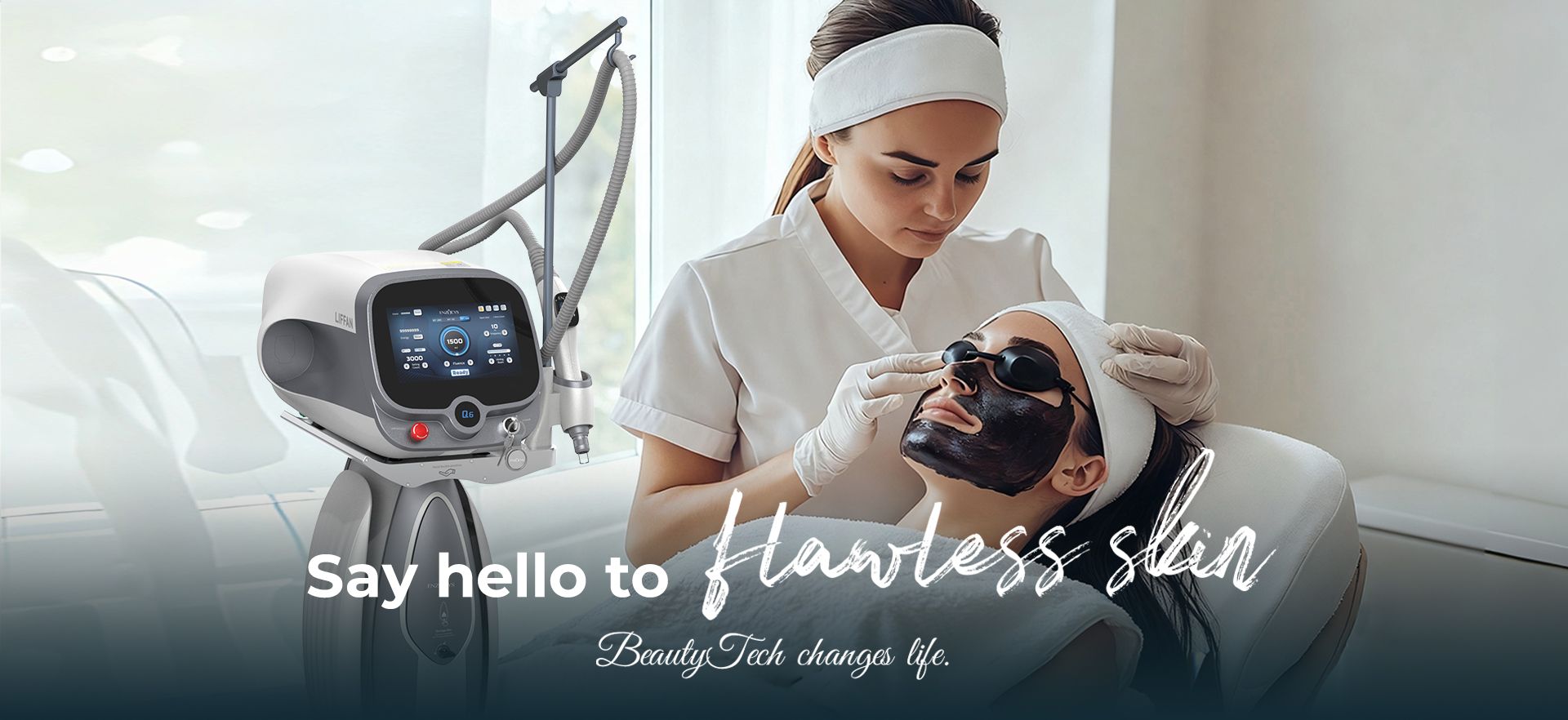
Targeting dermal pigment and embedded tattoo inks requires generating peak optical power within extremely brief temporal windows. Integrating a professional Q switched ND YAG laser machine into clinical practice provides clinicians with high-peak power pulses that fragment chromophores via acoustic shockwaves rather than thermal diffusion. Technology developed by ENZOEYS demonstrates how nanosecond pulse engineering can deliver targeted energy for pigment and tattoo-related aesthetic treatments.
Selecting appropriate short-pulse systems relies on understanding how temporal energy compression transforms photothermal energy into mechanical disruption. Examining the fundamental physics behind nanosecond emission reveals why short-pulse platforms remain vital for modern dermatological procedures.
Photoacoustic Fragmentation Mechanics
Short-pulse lasers emit high energy densities over nanosecond durations, generating rapid thermal expansion within microscopic target structures. Unconfined rapid thermal expansion produces powerful acoustic shockwaves that shatter targeted ink particles or melanin granules into smaller fragments.
The resulting smaller pigment particles can then be progressively cleared by the body’s natural processes. Photoacoustic disruption minimizes thermal conduction to surrounding healthy tissue, significantly reducing post-treatment scarring or textural changes.
Dual Wavelength Applications and Chromophore Selectivity
Varying chromophores absorb distinct optical wavelengths according to their physical absorption spectra. Emitting a 1064nm fundamental wavelength enables deep dermal penetration, making it suitable for applications involving deeper pigmentation and darker tattoo inks.
Frequency-doubling the laser output creates a 532nm wavelength that selectively targets superficial epidermal melanin and red ink pigments. Combining both 1064nm and 532nm wavelengths allows a single platform to address diverse pigmentary depth challenges effectively.
Dual-Mode Pulse Modulations and Clinical Adaptability
Modulating pulse delivery mechanisms allows practitioners to tailor physical tissue interactions based on specific dermatological indications. Operating an adaptable Q switch laser machine provides options to switch between intense single-pulse modes and thermal-assisted multi-pulse configurations.
Deploying dual-mode systems with SPT and HPT configurations allows practitioners to alternate between sharp photoacoustic disruption and gentle thermal skin toning. Platforms such as the LIFFAN Q6 utilize dual-mode flexibility to expand treatment coverage from tattoo clearing to carbon peeling and skin rejuvenation procedures.
High-Frequency Output Stability and Beam Homogeneity
High-frequency laser operation can cause beam distortion or pulse energy fluctuation if optical components fail to maintain thermal stability. Non-uniform spot profiles create localized hot spots, increasing risks of superficial thermal injury or uneven pigment clearance.
The Q switched ND YAG laser machine incorporates advanced optical engineering that supports 10 Hz high-frequency stable output without spot profile distortion during rapid scanning procedures. Stable beam output and spot performance support more consistent energy delivery across the treatment area.
Pulse Width Considerations and Thermal Relaxation Time
Effective target fragmentation requires laser pulse durations to remain shorter than the thermal relaxation time of the targeted chromophore. In a Q switched ND YAG laser machine, nanosecond pulses match the thermal relaxation parameters of microscopic pigment structures precisely.
Delivering energy faster than heat can dissipate confines thermal stress strictly to target melanosomes or ink deposits. Preserving surrounding cellular structures minimizes post-inflammatory hyperpigmentation, supporting safer treatment protocols across delicate facial skin.
Clinical Versatility and Multi-Indication Workflows
Acquiring multi-purpose optical systems optimizes physical floor space while broadening clinical treatment menus. Systems engineered for dual-wavelength emission handle various indications, including epidermal lentigines, dermal melasma, post-acne erythema, and multi-color tattoo removal.
Incorporating versatile units like the LIFFAN Q6 allows practices to transition smoothly between pigment correction and skin rejuvenation sessions. Versatile operational capacity supports steady clinical workflow management and improves overall equipment utilization.
User-Centric Controls and Beam Quality Calibration
Modern clinical systems can incorporate calibration and control features designed to support stable energy delivery during treatment.
Intuitive user interfaces streamline parameter adjustments, allowing technicians to modify spot sizes and repetition rates rapidly. Clear operational feedback reduces setup times, helping clinicians concentrate fully on treatment execution and patient safety.
User-friendly interfaces and clearly defined operating settings can simplify parameter adjustments during clinical procedures. When combined with audible and visual confirmation cues for each parameter change, these user-centric design elements foster a smoother clinical workflow—allowing practitioners to maintain consistent treatment quality even during back-to-back appointments or when covering for absent colleagues.
Strategic Evaluation for Equipment Acquisition
Selecting laser machinery requires evaluating long-term optical alignment stability and component durability alongside initial hardware capabilities. Solid-state laser cavities built with high-grade optical crystals maintain stable output characteristics through millions of firings.
Investing in a validated Q switch laser machine provides clinical facilities with predictable service requirements and low operational downtime. Robust hardware construction protects long-term operational investments while maintaining high treatment standards for demanding patient care environments.
Conclusion
Understanding nanosecond pulse kinetics, wavelength selectivity, and beam stability principles enables clinical directors to make informed hardware procurement decisions. Modern Q-switched technology balances rapid photoacoustic fragmentation with epidermal protection across varied dermatological conditions. Systems designed by ENZOEYS demonstrate how integrating dual-mode options, stable high-frequency output, and precise beam delivery elevates clinical performance and expands operational versatility for modern aesthetic practices.
